
6 New Animetrics Studies + AVA Canada
Issue 2 | March 2026
Welcome from the founders!
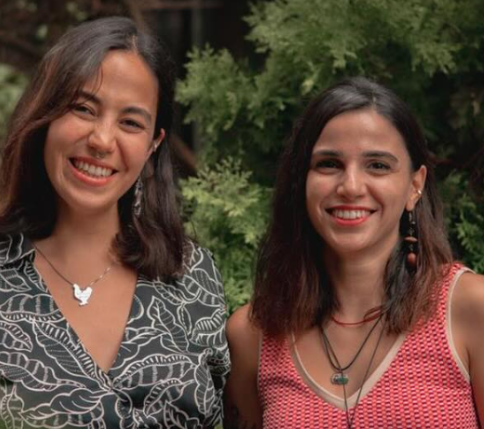
In this issue, we’re sharing 6 new studies from Animetrics and what’s ahead. We’re also very happy to announce that we’ll be speaking at AVA Canada!
You’re receiving this because you either subscribed or supported our work along the way, and we wanted you to see what you’ve helped make possible.
Over the past few months, our focus has been on one core question: What does locally grounded evidence look like in regions and topics where very little data exists?
This quarter, that question turned into 6 new studies. And we’re just getting started.
As always, thank you for being part of this growing community. Your support makes it possible for us to produce research that is rigorous, culturally informed, and designed for practical use.
What we’ve been working on
Since our last issue (December 2025), we have:
Released 5 new country reports across the Gulf and Lebanon
Published a new Türkiye study on halal & animal welfare
Delivered 2 small scale capacity strengthening projects
Advanced our implementation framework
Prepared for upcoming conference presentations (AVA Canada)
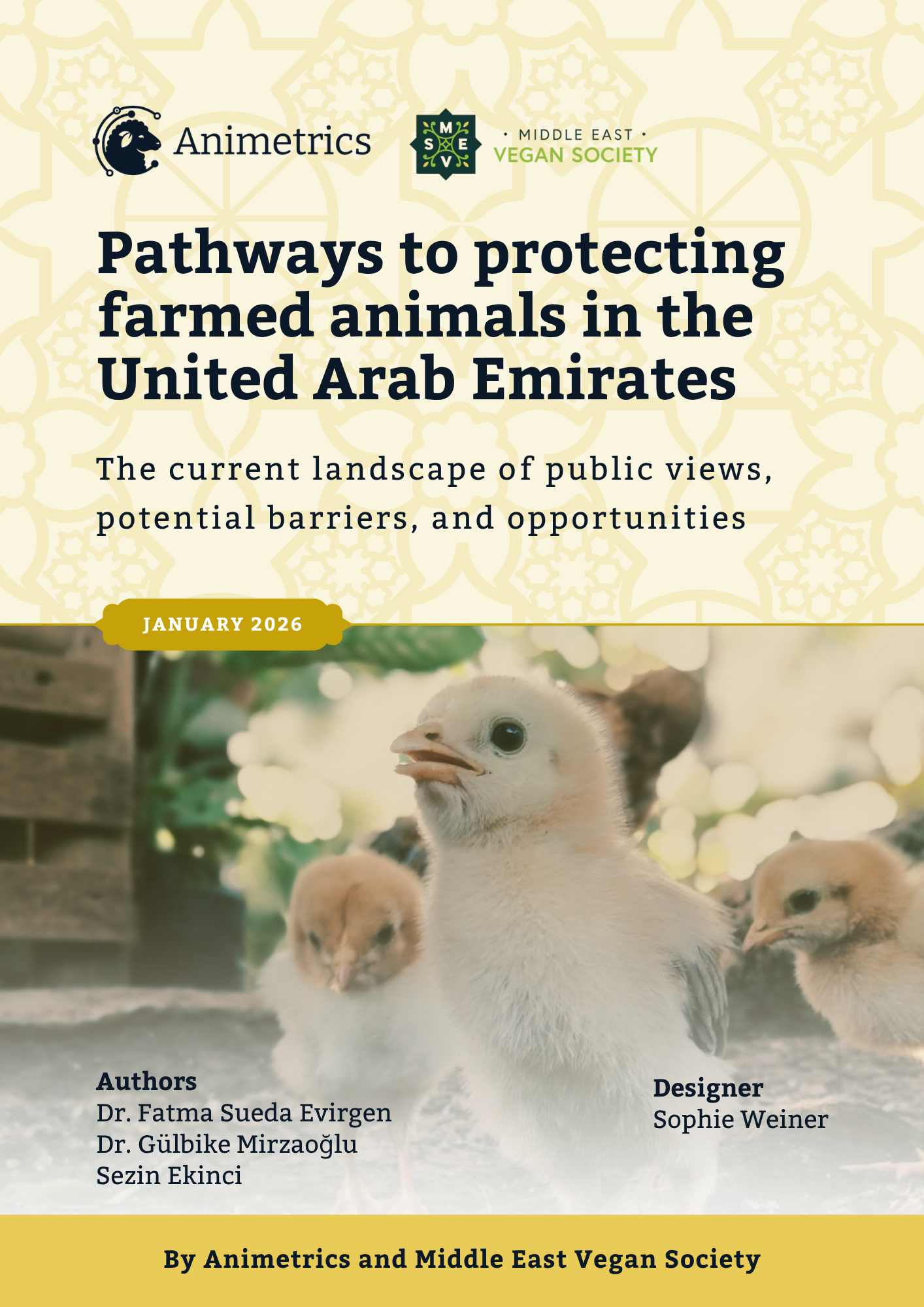
Featured Study:
Pathways to Protecting Farmed Animals series (Middle East/South West Asia)
(In collaboration with Middle East Vegan Society + Sezin Ekici)
Research on public attitudes toward animal agriculture is growing globally — but SWANA/MENA remains under-studied. The region is characterized by rapid population growth, rising demand for animal-based foods, and distinct cultural and institutional contexts. Without local data, advocacy strategy becomes guesswork.
To help fill that gap, we conducted a large public survey with around 2,000 participants across the five countries: United Arab Emirates, Kuwait, Qatar, Saudi Arabia, and Lebanon
Across the five reports, we explore public views related to farmed animals across:
Pathways to change: dietary behaviour, support for alternatives (e.g., cultivated meat), advocacy, and stronger laws and regulations.
Barriers to change: positive views of meat, speciesist beliefs, religious justifications, and cultural expectations around masculinity or hospitality.
Facilitators of change: recognizing farmed animals as sentient and understanding links between animal agriculture and wider issues like climate change, pandemics, and worker conditions.
Responsibility & Support: who people think should lead public education on farmed animal welfare and the need for legal protections, and what kinds of support they are willing to offer to animal protection organizations.
What we found
Plant-based eating is viewed positively: Despite most people eating mainly animal-based diets, around two-thirds view plant-based diets positively across all five countries, and many are interested in learning more about plant-based proteins or replacing animal protein.
Strong support for legal protections: Support for legal protections for farmed animals is consistently high, ranging from nearly 8 in 10 to more than 9 in 10 respondents.
Broad public support for animal protection organisations: Around half of respondents say they would support organizations protecting farmed animals and promoting plant-based eating, often through low-effort actions like following or sharing content online.
Key barriers: Across countries, strong attachment to meat and the belief that eating it is an unquestionable right are major barriers to dietary change; religious and hospitality norms also contribute in some contexts.
Key facilitators:Recognising farmed animals as sentient and awareness of the harms of industrial animal agriculture (e.g., health and environmental impacts) are linked to stronger support across multiple pathways.
Who people expect to educate the public: Governments and certification bodies are widely seen as responsible for public education on farmed animal welfare and legal protections, with religious institutions also commonly mentioned in the UAE, Kuwait, Qatar, and Saudi Arabia.
Why this matters
Effective advocacy depends on understanding where the public already stands.
These findings highlight something important: there is openness to change, strong support for legal protections, and interest in plant-based eating.
However, significant and culturally specific barriers remain.
Without this kind of granular evidence, it is difficult to design strategies that resonate locally.
🎙 A podcast discussion of these findings (with MEVS) is coming soon.
📝 Have questions or want support applying the findings? Take our short survey.
New Study on Halal & Animal Welfare
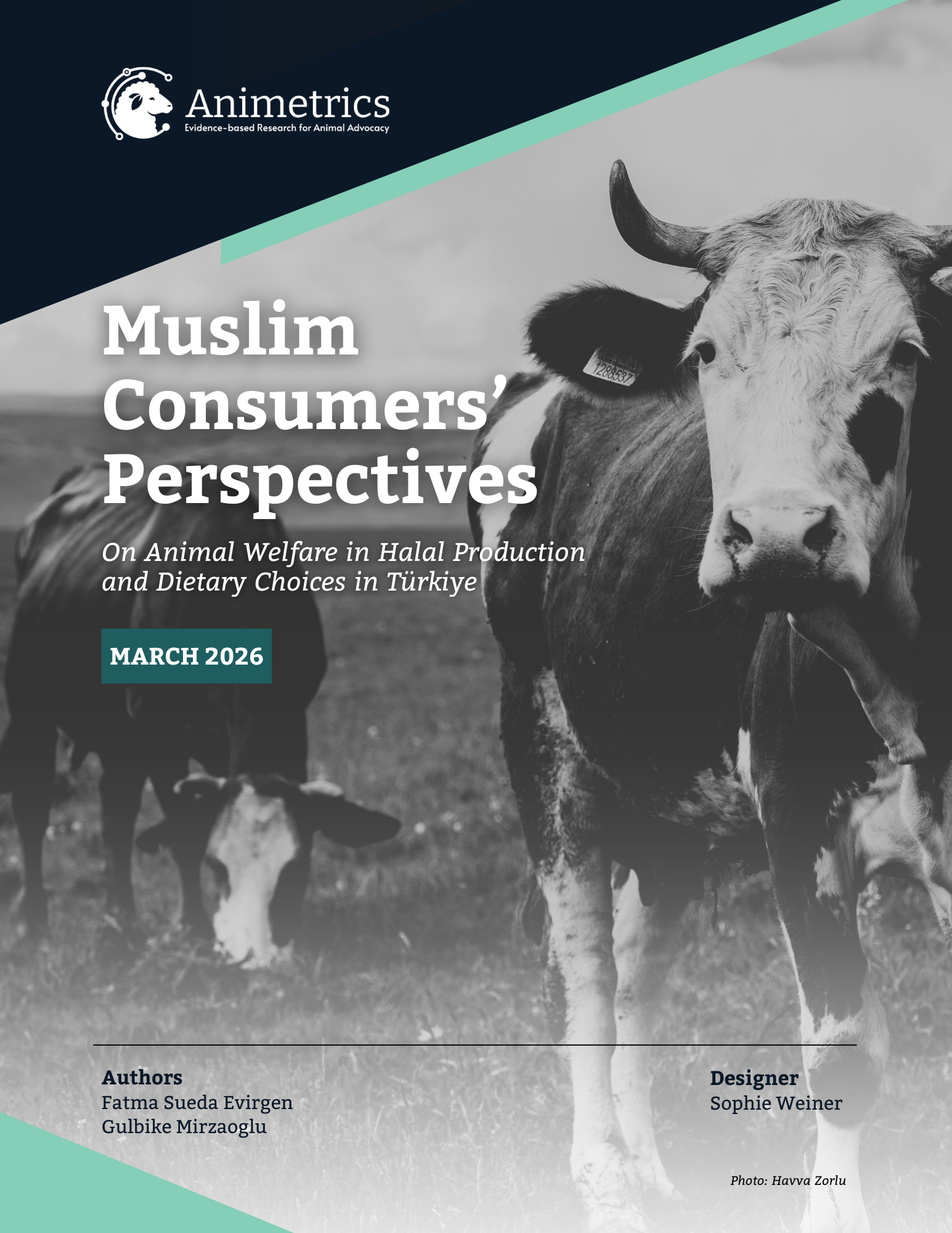
What Do Muslim Consumers Think About Halal and Animal Welfare? The Case of Türkiye
Muslims make up nearly two billion people worldwide, and their food choices are often guided by halal principles under Islamic law. For many, halal also reflects beliefs about how animals should be treated.
Despite this rapid growth, we still know surprisingly little about how Muslim consumers connect halal with animal welfare, or how faith influences their dietary choices.
Understanding these perspectives is crucial as it can help organizations develop more effective and culturally grounded ways to improve animal welfare in halal food systems.
To explore this, we surveyed 788 Muslim adults in Türkiye, asking whether they see animal welfare as a requirement of halal, who they believe is responsible for ensuring animal welfare standards in halal food production, and whether avoiding animal-based products is compatible with Islam.
Key highlights
Most participants view animal welfare as essential for halal status: nearly 70% say animals must be well treated throughout their lives, and over half believe halal systems treat animals better than non-halal ones.
Responsibility for animal welfare in halal production is viewed as mainly institutional, with halal certification bodies and governments seen as most responsible, followed by farms and factories, while religious authorities and consumers are considered less central.
Among those who see consuming halal food as very important, responsibility also extends to religious authorities, religious leaders, and consumers, making animal welfare a shared responsibility beyond production institutions.
While animal welfare is widely seen as part of halal, stunning remains controversial: Only 17% support allowing it, with strongest opposition among those who place high importance on halal and report higher religious practice.
Plant-based diets are widely seen as compatible with Islam, with nearly two-thirds of participants saying they raise no religious objections.
📝 Have questions or want support applying the findings? Take our short survey.
Capacity Building
We completed two small-scale capacity strengthening collaborations this quarter.
We partner directly with organizations to reduce barriers to evidence-informed advocacy — through survey design, interpretation, and strategic guidance.
Looking ahead

Finalize our Implementation Support Strategy and scale the program
Continue developing our “Muslim Perspectives on Animal Welfare & Halal Food Systems” paper
Finalize our Turkish profiles study
Upcoming events:
AVA Canada! Sueda will be speaking in two sessions, feel free to reach out if you'll be there
AVA Academy Berlin (Sueda)
Connect & Support
Want to partner or share feedback on our implementation plan?
Planning to use our research?
Reading something we should know about?
Want to introduce us to funders interested in Global South or Muslim-community research?
You can also support our work directly. Philanthropists, philanthropy advisors, foundations, and corporate partners can read more here about how Animetrics can help make your philanthropy successful.
Your Feedback Matters
What would you like to see in future issues? More deep dives on methods, short explainer videos, raw datasets, partner case studies, or Q&A with researchers? Email us!
